Crown Reduction in Marylebone
Professional tree crown reduction for homes and businesses in Marylebone

If you are looking for crown reduction in Marylebone, you are likely dealing with a tree that has become too large for its setting, is blocking light, or is starting to affect nearby buildings, gardens, or rooflines. In an area like Marylebone, where elegant period properties sit alongside apartment buildings, office premises, and busy streets, trees need careful management. A well-planned crown reduction can help restore balance, improve safety, and keep a tree looking natural rather than harshly cut back.
This service is especially valuable in central London locations where outdoor space is limited and trees often grow close to walls, pavements, balconies, and neighbouring plots. Whether the tree is in a private garden, a shared courtyard, a commercial frontage, or part of a managed estate, the aim is always the same: reduce the spread of the crown in a controlled, skilled way while protecting the tree’s long-term health.
Crown reduction in Marylebone is not simply about making a tree smaller. It is about making the tree more suitable for its site, while keeping its shape, structure, and vitality in mind. A proper reduction is carried out selectively, with attention to branch junctions, future growth, and the effect on the tree’s overall balance. That is why local knowledge and a thoughtful approach matter so much here.
Why crown reduction is often needed in Marylebone

Marylebone has a unique mix of building styles and property layouts. Tall townhouses, mews houses, mansion blocks, private gardens, and commercial terraces all create different constraints for trees. In many cases, trees that were once well placed have outgrown their space over time. A crown that is too wide or too heavy can cause shading, obstruct windows, interfere with gutters, overhang pavements, or create awkward contact with surrounding structures.
Local property owners often ask for crown reduction when they want to preserve a mature tree but need to manage its size more responsibly. It may be required after a period of strong growth, after storm damage, or when branches begin to encroach on neighbouring land. It is also a practical option where a tree is affecting daylight into a flat, house, or work space. In dense urban surroundings, even a modest reduction can make a significant difference to comfort and usability.
Another common reason is risk management. Trees with heavy outer growth may become more vulnerable to wind movement, especially where buildings create channelled gusts between streets and courtyards. Reducing the crown can lessen pressure on key limbs and help the tree cope better with local conditions. A careful arborist will always look at the tree’s species, condition, and previous pruning history before recommending any work.
What crown reduction actually involves
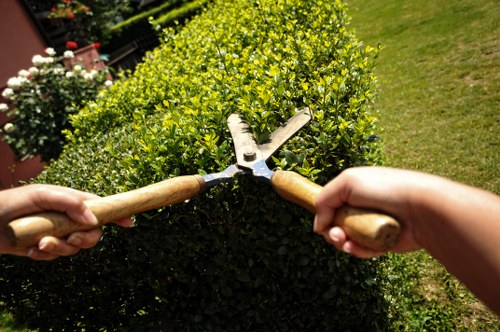
Crown reduction is a precise form of tree pruning that shortens the height and/or spread of the tree by cutting branches back to suitable growth points. The goal is to reduce overall volume while maintaining a natural appearance. This is different from topping, which removes large sections indiscriminately and can seriously harm the tree. Reduction should always be planned so the remaining canopy stays healthy and structurally sound.
In practice, a crown reduction may involve shortening selected branches, improving the distribution of weight, and removing weak, crossing, or damaged growth at the same time. Good pruning encourages the tree to continue growing in a controlled way. On suitable trees, the work can also help better light penetration, reduce shadowing, and improve air movement through the canopy.
It is important to use the right technique for the tree species and its condition. Some trees tolerate reduction better than others, and the amount removed must be kept within sensible limits. A professional service will assess whether the tree needs a reduction, a lighter prune, crown thinning, deadwood removal, or perhaps no work at all beyond monitoring. That judgement is part of what customers pay for: not just the cutting itself, but the expertise to do the right job.
Benefits for Marylebone property owners
Practical advantages for residential and commercial sites

For many local customers, the main benefit of crown reduction is simple: the tree becomes easier to live or work with. In Marylebone, where space is valuable and buildings are often close together, that can mean more daylight, less pressure on surrounding structures, and a tidier relationship between tree and property. A thoughtfully reduced crown can also make patios, gardens, and ground-floor rooms feel brighter and more open.
There are also visual benefits. Trees are an important part of Marylebone’s character, and many property owners want to keep them as attractive features rather than obstacles. A skilled reduction can improve the tree’s outline and restore proportion after overgrowth. When done well, the result should look natural, not forced. The tree should still read as a healthy mature specimen, just better suited to its site.
For businesses, managing a tree can support the overall presentation of the property. Overgrown branches may block signage, reduce visibility, or interfere with access for customers, deliveries, and maintenance. Crown reduction can help keep entrances clear, ensure paths remain practical, and reduce the chance of complaints from neighbouring occupiers or leaseholders. It is especially helpful for managed buildings where multiple stakeholders need the site to remain safe and presentable.
Other benefits may include:
- Improved light into rooms and outdoor spaces
- Reduced encroachment onto neighbouring property
- Better clearance over roofs, paths, and boundaries
- Lower wind resistance in exposed positions
- A more balanced and manageable canopy
- Improved long-term structure when carried out correctly
How a local crown reduction service works
From enquiry to completion
A good local service should begin with an assessment of the tree and the site. In Marylebone, this is especially important because access, parking, and neighbour considerations can affect how the work is carried out. A tree near a narrow mews, a busy road, or a shared courtyard needs a different setup from one in a private rear garden. The initial discussion should focus on the issue you want solved, as well as the tree’s condition and any constraints around the property.
After the assessment, the work plan will normally include which branches need to be reduced, how much canopy can reasonably be removed, and whether other pruning actions are needed at the same time. The aim is to achieve the desired result without overcutting. For many trees, the final appearance matters as much as the technical pruning, especially in visible front gardens or prominent commercial spaces.
Once the work is agreed, a professional team will organise the required equipment, access methods, and waste removal. In Marylebone, this may involve careful timing to avoid traffic disruption, respectful coordination with neighbours, and planning around loading restrictions or limited parking. A local team is often better placed to handle these practical details efficiently because they understand the realities of working in central London.
Typical steps in the service
- Site visit and tree assessment
- Discussion of the desired outcome and any concerns
- Review of access, boundaries, and site conditions
- Carrying out the reduction using appropriate pruning methods
- Removal of branches and tidy finish to the work area
- Optional advice on aftercare and future maintenance
Choosing the right approach for the tree
Reduction, thinning, or other pruning?
Not every tree problem requires the same solution. Sometimes customers ask for crown reduction when what they really need is crown thinning, selective branch removal, or deadwood clearance. A professional will look at the crown as a whole and recommend the most appropriate treatment. The difference matters, because removing too much material from the wrong place can leave the tree stressed, imbalanced, or more vulnerable to regrowth issues.
Crown reduction is often chosen when the main concern is overall size, height, or spread. Crown thinning may be better if the goal is to let more light through without changing the external dimensions dramatically. Deadwood removal may be enough if the tree is healthy but has a few brittle or failing limbs. Sometimes a combination of these services is best. The right method depends on species, age, location, and what the customer is trying to achieve.
In Marylebone, one of the most common challenges is preserving a tree while making it compatible with nearby structures. For example, a mature tree beside a townhouse may need modest reduction to stop branches touching the building or screening key windows. In a commercial courtyard, the priority may be keeping the area accessible and presentable. In a shared residential space, the work may also need to be sensitive to neighbours and communal expectations. A local service should be able to balance all of these factors.
What a careful arborist will look for
- Signs of decay, weakness, or previous poor pruning
- Branch structure and load distribution
- How the crown interacts with buildings and boundaries
- Species-specific response to reduction
- Safety considerations for people and property nearby
- Whether the requested reduction is realistic and sustainable
Why Marylebone customers benefit from a local team
Using a local company for crown reduction in Marylebone can make the entire process smoother. Central London work often involves tight access, short working windows, and careful coordination with residents, staff, or managing agents. A team that regularly works in the area is more likely to understand these pressures and plan accordingly. That can save time and reduce hassle for the customer.
Local familiarity also helps when it comes to the kinds of properties commonly found here. Many Marylebone sites involve mature trees in compact gardens, internal courtyards, rear mews spaces, roof terraces, or shared access areas. These are not one-size-fits-all jobs. They require a crew that can adapt the equipment and method to the space available, while keeping disturbance low and the finish neat.
There is also value in working with a team that understands the expectations of local homeowners, landlords, tenants, and commercial occupiers. People often want the work completed efficiently, with minimal interruption and a strong focus on tidiness. A local service is more likely to appreciate these priorities and provide an experience that feels organised from start to finish.
Common property types and situations in Marylebone
Where crown reduction is often requested
Marylebone has a varied built environment, which means tree work needs to be flexible. Crown reduction is commonly requested in properties such as period townhouses, mansion block gardens, mews houses, managed residential courtyards, office terraces, schools, healthcare premises, and mixed-use buildings. The specific challenge may differ, but the underlying goal is usually the same: keep the tree manageable without losing its value to the site.
In residential settings, homeowners often want to protect daylight, privacy, and garden usability. A tree that has become too dominant can make an outdoor area feel enclosed, even if it is otherwise healthy. In commercial settings, the concern may be access, appearance, and reducing interference with building frontage. In both cases, a well-executed reduction can improve day-to-day use of the space without removing the tree entirely.
Nearby areas such as Regent’s Park, Fitzrovia, Soho, Paddington, and the wider Westminster district can have similar constraints, especially where streets are narrow or buildings sit close to trees. That means a service experienced in Marylebone is often well prepared for nearby work too. If you are comparing options, it is worth choosing a team that understands central London conditions rather than treating the job like a suburban garden project.
Access, parking, and site logistics
Why practical planning matters in central London
One of the biggest differences between tree work in Marylebone and work in more open areas is logistics. Parking can be limited, access routes may be narrow, and equipment needs to be positioned carefully to avoid disruption. If the tree is in a rear garden or internal courtyard, the team may need to move materials through the property with extra care. If the work is roadside, timing and positioning become even more important.
These are not reasons to avoid tree work; they are simply the realities of operating in a busy urban environment. A good local team will plan the job around the site rather than trying to force the site to suit the job. That may involve arranging suitable access, understanding how to protect paths or floors, and deciding in advance how the cut material will be removed. The better the planning, the smoother the result.
For property managers and business owners, this level of preparation matters because it helps minimise disruption. Customers, staff, and neighbours all appreciate a tidy, controlled operation. If you are arranging work in a shared building or managed estate, it is useful to discuss any access rules, loading limitations, or timing preferences early on. Clear communication helps avoid delays and keeps everyone informed.
What is included in a crown reduction service
Typical elements customers can expect
A proper crown reduction service should include more than just cutting branches. It should begin with an understanding of the tree and your reasons for requesting the work. It should also end with a clean and professional finish. Customers often want assurance that the work will be done carefully, with the tree’s health in mind and the surrounding property respected throughout.
Depending on the tree and the site, the service may include:
- Initial inspection and discussion of the required outcome
- Selective reduction of selected limbs and branch ends
- Removal of dead, damaged, or awkward growth where appropriate
- Attention to shape, balance, and future growth direction
- Tidy removal of cut material from the site
- Cleanup of the work area on completion
- Basic aftercare advice where needed
Some customers also ask for related work at the same time, such as crown lifting to improve clearance, thinning to increase light, or deadwood removal for safety. Combining suitable services can often be more practical than arranging separate visits, provided the tree can handle the work and the approach remains appropriate.
Pricing factors for crown reduction in Marylebone
What can affect the quote?
Because every tree and site is different, pricing for crown reduction usually depends on a range of practical factors rather than a simple fixed figure. The size of the tree is one consideration, but access, location, complexity, and disposal requirements also play a significant role. In Marylebone, the logistics of central London often influence the amount of planning and labour needed.
Common pricing factors include:
- Tree height, spread, and overall volume
- Species and condition of the tree
- How much of the crown needs to be reduced
- Access to the tree and surrounding work area
- Whether the site is private, shared, commercial, or roadside
- Waste removal and cleanup requirements
- Any additional pruning requested alongside reduction
It is sensible to request a site-specific quote rather than relying on assumptions. That way, the service provider can see the tree, understand the access constraints, and talk through the practical details. A clear quote also helps you decide whether the work should be done now, scheduled for later, or adjusted to suit your budget and priorities. Request a free quote if you want a proper assessment tailored to your property.
How to prepare for your appointment
Simple steps to help the work run smoothly
You do not need to do a great deal before the team arrives, but a little preparation can make the job easier and faster. This is especially useful in Marylebone, where access and parking may already be tight. If the team can get straight to work, the visit is usually more efficient and less disruptive for everyone involved.
Preparation checklist:
- Make sure access gates, side passages, or courtyards are unlocked or available as arranged.
- Move delicate items, garden furniture, or vehicles away from the work area if possible.
- Inform neighbours, residents, or building management if access might affect them.
- Highlight any concerns about cables, sheds, glass, or surface materials near the tree.
- Let the team know about any time restrictions, loading issues, or site rules.
- Clarify whether you want the branch waste removed or kept on site if that is an option.
For commercial customers, it is also helpful to coordinate with staff or building management so the work area stays clear. If the tree is near an entrance or walkway, temporary adjustments may be needed to keep people safe while work is underway. Good planning means the finished result feels seamless rather than disruptive.
Safety, tree health, and responsible pruning
Why skill matters as much as equipment
Crown reduction should be carried out by someone who understands tree biology, safe working methods, and the long-term effects of pruning. Cutting too much, cutting in the wrong place, or leaving poorly placed wounds can lead to weak regrowth, stress, and a less attractive tree. In a sensitive area like Marylebone, the stakes are higher because the tree may be close to buildings, pedestrians, vehicles, or shared boundaries.
A responsible service will always aim to preserve the tree’s integrity. That means making accurate cuts, avoiding unnecessary damage, and not reducing more than the tree can reasonably tolerate. It also means recognising when a tree may be unsuitable for reduction because of its condition or previous treatment. Honest advice is part of a proper service, even if it means recommending a lighter approach or an alternative.
Customers often want reassurance that the tree will still look like a tree after the work is done. That is a fair expectation. The objective of crown reduction is not to strip away character, but to rebalance growth in a controlled way. With the right approach, the tree can keep contributing to the setting while becoming safer and easier to manage.
Areas covered around Marylebone
Local coverage for nearby homes and premises
Customers seeking crown reduction in Marylebone often need support in the surrounding central London neighbourhoods as well. A local service can usually cover the immediate area and nearby districts where similar property types and access conditions are common. This is useful if you manage more than one site or have work needed in nearby streets and estates.
Common nearby areas may include:
- Regent’s Park
- Fitzrovia
- Paddington
- Mayfair
- Soho
- Westminster
- Baker Street area
- Edgware Road area
If your property sits just outside Marylebone, it is still worth getting in touch. Tree work requirements are often very similar across central London, and a team familiar with one part of the West End is usually well prepared for nearby streets and properties. Book your service now if you are ready to arrange an assessment or want to discuss the tree’s condition.
Frequently asked questions
Answers to common customer questions
How often does a tree need crown reduction?
It depends on the species, age, growth rate, and site conditions. Some trees may need occasional reduction to stay manageable, while others can be left for longer periods. A local arborist can advise based on what your tree actually needs rather than on a fixed schedule.
Will crown reduction damage my tree?
When done correctly and at the right time for the tree, reduction can be a controlled and beneficial intervention. Problems usually arise when too much is removed or the work is done badly. That is why the method and the size of the reduction matter.
Can you reduce a tree near a house or wall?
Yes, but the work needs careful planning. Trees close to buildings are common in Marylebone, and the reduction must be carried out with attention to branch direction, access, and safety around the structure.
What if I am not sure whether I need reduction?
That is very common. Many customers know the tree is becoming a problem but are unsure what to ask for. A site visit can help determine whether crown reduction, thinning, lifting, or another approach is most suitable.
Will the tree look heavily cut back?
A well-done reduction should look balanced and natural. The best results are subtle and proportionate, especially in visible front gardens or prestigious streets where appearance matters.
Do I need to prepare anything before the team arrives?
Only basic preparation is usually needed, such as providing access and moving fragile items nearby. If the tree is in a shared or managed property, it is helpful to inform anyone affected by the work.
Ready to arrange crown reduction in Marylebone?
Take the next step with a local service
If a tree on your property is becoming too large, too wide, or too difficult to manage, a professional crown reduction may be the right solution. In Marylebone, where trees often sit close to buildings and public spaces, it pays to use a team that understands the local environment and can carry out the work with care. The right pruning can improve light, reduce pressure on surrounding structures, and help preserve the tree for years to come.
Whether you are a homeowner, landlord, estate manager, business owner, or facilities contact, it is sensible to act before the problem becomes more difficult. A timely reduction is often easier and more cost-effective than dealing with excessive overgrowth later. It can also help you avoid unnecessary conflict with neighbours or building users where branches have started to extend beyond their space.
Contact us today to discuss your tree, request a free quote, or book your service now. If you need crown reduction in Marylebone, a local professional approach can help you get the right result with minimal hassle and maximum care for the tree and the property around it.